At Plunge Pools Adelaide, we work within these approval rules every day. We design and install plunge pools across Adelaide and Greater Adelaide, and we plan compliance into the design to help homeowners avoid rejected applications, failed inspections, and costly changes.
In this article, you will learn how the plunge pool council approval rules work in Adelaide from a practical, real-world perspective. We will explain when a plunge pool becomes a regulated swimming pool, how development approval is assessed through PlanSA, what safety and fencing rules inspectors focus on, and the common mistakes that cause approvals to fail. This guide is designed to help you build once, approve once, and avoid problems before construction begins.
Why Plunge Pools Are Strictly Regulated in Adelaide
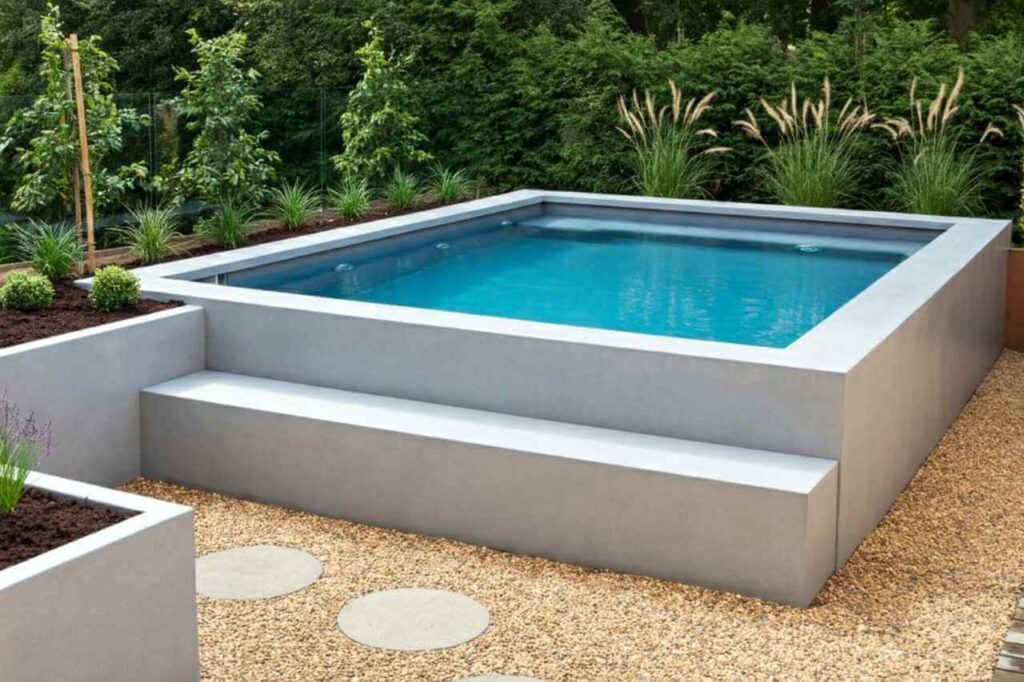
Plunge pools are strictly regulated in Adelaide because the law focuses on safety risk, not pool size or appearance.
Child drowning risk and why the rules exist
The main reason is child safety. Any water deep enough foryoung children to fall into and not stand up safely is treated as a drowning risk. That’s why the rules don’t change based on size, shape, or marketing.
Why are plunge pools treated the same as full-size pools
Once filled, a plunge pool behaves like any other pool. It holds water, it attracts kids, and it has the same access risk if it isn’t properly fenced and controlled.
Visual size vs legal classification
A compact pool in a courtyard can still be regulated. Councils don’t assess whether a pool “looks dangerous. They assess whether it meets the legal definition of a regulated pool.
Why “small” pools still trigger full compliance
Even small plunge pools often exceed 300 mm in depth. Once that happens, the rules apply in full. In practice, councils enforce these rules consistently, regardless of the situation or site size.
When a Plunge Pool Becomes a Regulated Swimming Pool
In Adelaide, a plunge pool becomes a regulated swimming pool based on how it functions, not what it is called. Once any key trigger is met, full compliance applies.
The 300 millimetre depth threshold
If the pool can hold water deeper than 300 millimetres at any point, it is legally classified as a swimming pool. This is based on the deepest point, not the average depth.
This applies to in-ground, above-ground, concrete, precast, and fibreglass pools.
Filtration systems as a regulatory trigger
If a plunge pool uses filtration or circulation, it is almost always treated as regulated. Filtration suggests the pool is meant to stay filled, so safety barriers, approvals, and inspections are expected.
Above-ground vs in-ground plunge pools
Above-ground pools are rarely exempt. If they exceed 300 mm or use filtration, they are regulated like in-ground pools.
Also, the pool wall is not automatically accepted as the barrier. Councils check wall height, access points, and nearby surfaces. In many cases, extra fencing must be installed.
Portable and inflatable pools explained
Portable and inflatable pools can still be regulated if they can hold more than 300 mm of water. Portability does not remove the safety risk if the pool stays filled and accessible.
Wading pools vs plunge pools vs spas
Wading pools are often shallow enough to avoid regulation, but depth is what matters.
Spa pools are regulated because they are designed to hold deeper water and stay filled. If a plunge pool functions like a spa, it may be assessed in a similar way.
Council decision steps explained simply
Councils and certifiers usually apply a straightforward logic test:
- Can the pool hold more than 300 millilitres of water?
- Does it use filtration or circulation equipment?
- Is it intended for ongoing use and kept filled?
If the answer is yes to any of these, the plunge pool is treated as a regulated swimming pool. Development approval, compliant safety barriers, inspections, and certification all apply to restrict access to the pool at all times.
Plunge Pool Development Approval in South Australia
Plunge pool approval sits inside South Australia’s planning system. This system checks safety, siting, and compliance before construction begins.
What “development approval” really means
Development approval is not one single permit. For plunge pools, it often includes:
- Planning consent (is it allowed on the site and in that location?)
- Building rules consent (is it built safely and fenced correctly?)
Many homeowners assume one approval is enough. In practice, most plunge pools in Adelaide need both.
Why do councils require both approvals?
Planning consent checks things like setbacks, proximity to boundaries, zoning rules, and neighbour impacts.
Building rules consent checks things like pool structure, safety barriers, gates, and compliance with Australian Standards (including AS 1926.1).
Skipping either step can lead to stop-work notices, failed inspections, or orders to change or remove work.
The planning framework you’ll hear about
Plunge pool approvals commonly involve:
- The PDI framework (the system that controls development assessment)
- The Planning and Design Code (rules for siting and planning assessment)
- Swimming Pool Safety rules (barriers, access control, and compliance)
- PlanSA (the online system used to lodge and track approvals)
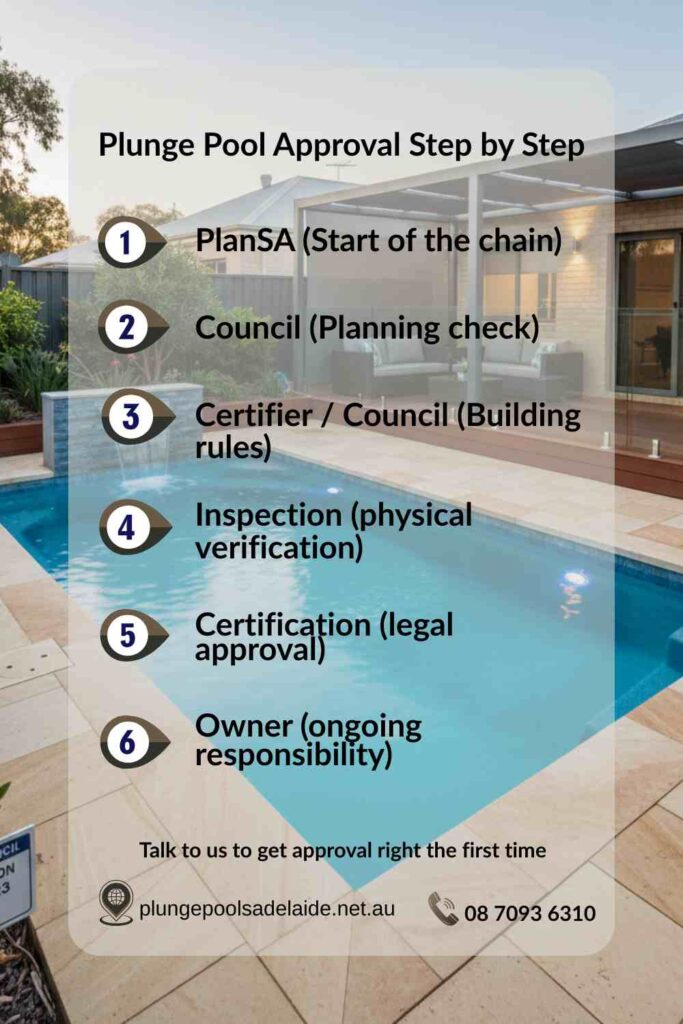
Step-by-Step Approval Process for Plunge Pools in Adelaide
When this process is followed in order, approvals are usually straightforward. When steps are skipped, delays are common.
Step 1: Check Requirements Using the PlanSA Wizard
The approval process should always begin with the PlanSA Wizard. This is South Australia’s official online assessment tool used to determine whether development approval is required for your plunge pool and what level of assessment applies.
The PlanSA Wizard considers factors such as:
- Pool depth and water capacity
- Whether the plunge pool uses a filtration system
- The pool’s location on the site
- Zoning and overlays under the Planning and Design Code
- Proximity to boundaries, easements, and buildings
In Adelaide, most plunge pools that can hold water deeper than 300 millimetres or use a filtration system are treated as regulated swimming pools. This means development approval is usually required.
Skipping this step often leads homeowners to assume approval is not needed, only to discover later that council approval and building rules consent were mandatory from the start. The PlanSA Wizard prevents incorrect assumptions and sets the direction for the entire approval pathway.
Step 2: Prepare Site Plans and Technical Documents
Councils and certifiers assess applications based on documents, not explanations. Verbal descriptions, builder assurances, or informal sketches carry no weight during assessment.
Accurate and complete documentation is one of the most important parts of the plunge pool approval process in Adelaide.
Typical documents required include:
- A detailed site plan showing the plunge pool location, property boundaries, setbacks, and nearby structures
- Pool dimensions, including length, width, and maximum water depth
- A compliant safety barrier and gate layout, including fence heights and gate swing direction
- Pump, filtration, and equipment locations
- Levels or cross-sections where the site slopes or sits close to boundaries
If the plans are incomplete, inconsistent, or unclear, councils will pause assessment and request further information. This is one of the most common reasons plunge pool approvals are delayed in South Australia.
Preparing accurate documents upfront reduces requests for amendments and shortens approval timeframes.
Step 3: Lodge the Application Through the PlanSA Portal
All plunge pool development applications in Adelaide are lodged online through the PlanSA portal. Applying formally creates a legal assessment record that is shared between council planners and building certifiers.
Once submitted, the application is assigned a reference number and enters the statutory assessment process. From this point forward, any changes to the design, location, or pool configuration must be documented and, in some cases, formally approved.
Informal changes after lodgement often trigger reassessment or require a new application, especially if the changes affect setbacks, fencing, or safety compliance.
Step 4: Council Assessment and Public Notification
After lodgement, council planners assess the plunge pool application against the Planning and Design Code. This assessment focuses on planning considerations rather than construction details.
Council planners typically assess:
- Compliance with setback requirements
- Impact on neighbouring properties
- Site coverage and visual impact
- Zoning rules and overlays
- Flooding, heritage, or coastal considerations, where applicable
Some plunge pool applications require public notification, particularly where the pool is close to boundaries, located on a constrained site, or affects neighbouring amenity. Public notification allows neighbours to review and comment on the proposal.
Public notification does not mean approval will be refused, but it can extend timeframes if objections are raised and require further assessment.
Step 5: Building Rules Assessment
In addition to planning assessment, plunge pools in Adelaide must pass a building rules assessment. This stage focuses on structural safety and compliance with Australian Standards.
The building rules assessment may be carried out by:
- The local council, or
- A private building certifier
This assessment checks that the plunge pool and its safety barriers meet building and safety requirements, including compliance with AS 1926.1 for swimming pool safety barriers.
Key elements assessed include:
- Pool shell construction and structural integrity
- Safety barrier height, gaps, and climb-resistant zones
- Gate self-closing and self-latching mechanisms
- Barrier alignment with surrounding surfaces and levels
Even if planning consent is granted, failure to meet building rules requirements can prevent the pool from being approved for use.
Step 6: Construction Conditions and Compliance During Build
Most plunge pool approvals in Adelaide include conditions of approval. These conditions must be followed exactly during construction.
Common approval conditions include:
- Building the pool and barriers exactly as shown on the approved plans
- Installing safety fencing before filling the pool
- Maintaining compliant access restrictions during construction
- Completing inspections at specified stages
Changing the plunge pool design, relocating equipment, or altering fencing after approval can trigger a requirement for reassessment or amended approval. This is a common issue when homeowners make late design changes without consulting their certifier.
Following approval conditions during construction avoids compliance failures at the final inspection stage.
Step 7: Final inspection and certification
Before the pool can be filled and used, a final inspection is required. Inspectors check the pool and barriers match the approved plans.
Only after you pass inspection and receive certification is the pool legally approved for use.
Mandatory Pool Safety Barrier Rules (AS 1926.1)
In South Australia, the most common reason a plunge pool fails inspection is not the pool shell, plumbing, or depth. It is the safety barrier. Councils and private certifiers apply AS 1926.1 – Swimming Pool Safety strictly, and even small non-compliances can prevent certification.
Minimum fence and barrier requirements
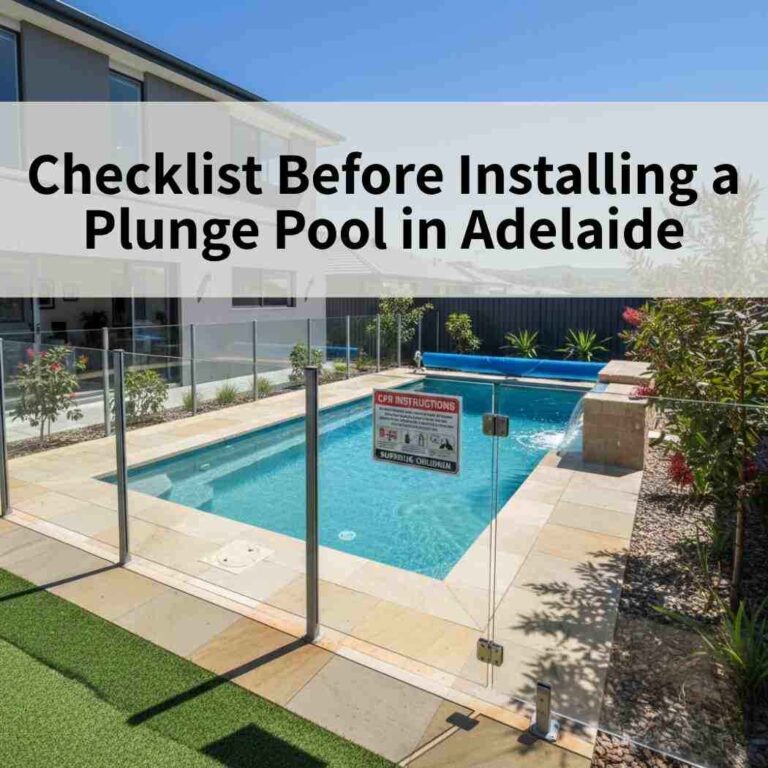
A compliant barrier must:
- be at least 1.2 metres high (effective height)
- have no gaps over 100 mm
- fully enclose the pool area (continuous barrier)
Effective height is measured from the highest nearby surface a child could stand on. Decking, paving, and garden beds often reduce effective height.
Gates and latching requirements
Gates must:
- open away from the pool area
- be self-closing from any open position
- be self-latching without needing manual force
If a gate does not close fully every time, it will fail.
Non-climbable zones explained
A non-climbable zone must be kept clear on both sides of the barrier. That means:
- no furniture, pot plants, steps, or structures nearby
- no landscaping that can act as a foothold
Even small changes after approval can make a pool non-compliant.
Boundary fences as pool barriers
A boundary fence can sometimes form part of the barrier, but only if it meets the same rules for height, gaps, and non-climbable zones.
Common problems include:
- fence too low
- climbable rails on the pool side
- ground levels reducing effective height
What Cannot Be Used as a Pool Barrier?
Many approvals fail because people assume these count as barriers when they don’t.
| Assumed solution | Council assessment |
| Hard spa cover | Not compliant |
| Lockable door access | Not compliant |
| Removable ladder | Not compliant |
| Low boundary wall | Not compliant unless fully assessed |
| Decorative screen | Not compliant |
Why are hard spa covers not accepted
Covers rely on people to secure them every time. Safety barriers must work at all times without effort.
Why doors and windows cannot act as barriers
Doors and windows cannot replace a physical pool fence. The rules aim to reduce reliance on memory and supervision.
Why removable ladders still require fencing
Inspectors assume the ladder could be left in place. If a child could access the pool when the ladder is present, fencing is still required.
Council Inspections and Certification Requirements
Council inspections confirm that what was built matches what was approved. If there is a difference, certification will not be issued until it is fixed.
Important: Do not fill the pool until the final inspection is passed.
Mandatory inspection for new plunge pools
New plunge pools that require approval must be inspected before they can be legally used.
Inspection timing before filling the pool
In most cases, the pool must not be filled until after you pass the final inspection.
Consequences of filling before approval
Filling early can trigger:
- stop-use notices
- orders to drain the pool
- fines or enforcement action
- delayed certification
What inspectors check on-site
Inspectors usually check:
- barrier height and gap spacing
- gate operation and latch function
- non-climbable zones (both sides)
- pool access points
- CPR signage (where required)
Inspection to certification process
- inspection happens
- defects are listed (if any)
- fixes are completed
- re-inspection (if needed)
- certification is issued
CPR Signage and Emergency Requirements
CPR signage is a mandatory safety requirement for regulated plunge pools in Adelaide.
A CPR sign must be displayed near the pool area. It provides step-by-step instructions for emergencies and forms part of the broaderpool and spa safety framework enforced across South Australia.
Mandatory CPR signage rules
CPR signage is mandatory because it provides immediate first aid guidance in an emergency while help is being contacted.
Size, visibility, and durability requirements
The sign must be:
- clear and easy to read
- durable and weather-resistant
- up to date with current CPR steps
Placement near the pool area
The sign must be placed where it can be easily seen from the pool area, usually near the entrance or gate.
SA Water Permit Requirements for Filling Your Pool
Filling a plunge pool can require separate approval from SA Water.
Why is SA Water approval required
SA Water controls large water fills to protect the supply and manage peak usage. Filling without approval (when required) can lead to penalties.
Water volume declarations
You may need to declare how much water is needed, based on pool dimensions. Accuracy matters.
Smart Approved WaterMark cover requirements
In some cases, SA Water requires a Smart Approved WaterMark pool cover to reduce evaporation.
30-day vs 60-day fill permits
Permits are often time-limited, commonly 30 or 60 days. If the permit expires, you may need to reapply.
Pool Location, Siting, and Planning Constraints
Not every site can support a plunge pool. Even a compliant pool can be refused based on location.
Boundary setbacks and proximity rules
Pools must meet setback distances from boundaries and structures. Tight setbacks commonly cause delays or redesigns.
Easements and underground services
Pools generally cannot be built over easements without approval. Always do a “Before You Dig” search early.
Pump and filtration noise limits
Pumps must comply with noise expectations. Locating equipment away from boundaries and using acoustic control can reduce complaints.
Pools near retaining walls or decks
Pools near retaining walls, decks, or elevated structures may need engineering checks for structural safety.
Planning constraints summary
| Site factor | Common issue |
| Boundary proximity | Reduced setback |
| Easements | Building over services |
| Pump location | Noise complaints |
| Sloping sites | Structural complexity |
| Raised decks | Reduced barrier height |
Engineering and Technical Documentation
Some pools can be approved with standard documents. Others need engineering input.
Structural engineering for in-ground plunge pools
Engineering is often needed when soil conditions are unknown or when a pool is near boundaries, retaining walls, or buildings.
Filtration and suction safety requirements
Pools must meet suction safety requirements to reduce entrapment risk. Councils may request documentation if details are unclear.
Acoustic enclosures for pumps
Where pumps are close to neighbours, acoustic enclosures may be needed to reduce noise risk.
When Codemark certification applies
Codemark-certified systems can help confirm product compliance, but they do not remove site checks for barriers, location, and access.
Existing Pools, Older Pools, and Property Sales
Compliance doesn’t end once a pool is built. Existing pools can create problems during renovations or property sales.
Pools built before 1 July 1993
Older pools may not meet current standards. Renovations or changes can trigger upgrade requirements.
Minister’s Specifications and upgrade triggers
Upgrades may be triggered by:
- major renovations
- changes to access points
- new fencing or landscaping works
What happens when selling a property
Buyers, conveyancers, and lenders may ask for proof the pool is compliant. Missing proof can delay settlement or force upgrades.
Who Is Responsible for Ongoing Compliance
After a plunge pool is certified, the property owner remains responsible for compliance.
Owner responsibilities after approval
Owners must keep barriers, gates, and signage compliant over time. Approval is a moment in time, not a lifetime guarantee.
Maintenance of gates and barriers
Gate springs, hinges, and latches wear out. A gate that once passed can fail later if it stops self-closing.
Landscaping changes that break compliance
Common issues include:
- plants that reduce barrier height
- garden beds that create climbable surfaces
- furniture placed in non-climbable zones
Insurance and liability implications
Insurance and legal risk can increase if a pool is found to be non-compliant after an incident. Owners carry the responsibility.
Common Reasons Plunge Pools Fail Approval in Adelaide
Most failures are preventable and often occur when homeowners rely on informal guidance instead of formaladvice from certifiers or planners.
Incomplete or incorrect documentation
Common issues include:
- missing depths or dimensions
- unclear barrier layout
- inaccurate boundary measurements
- generic or outdated plans
If it isn’t shown clearly on the plans, it can be treated as non-compliant.
Incorrect fence and barrier assumptions
Common mistakes include:
- Assuming pool walls act as fences
- using decorative screens as barriers
- relying on boundary fences without assessment
Pump and filtration noise complaints
Noise complaints can delay approvals. Councils may require relocation or noise controls.
Boundary fence non-compliance
Effective height often fails once measured from the highest nearby surface (like decking or garden beds).
Filling the pool before inspection
Filling early can cause orders to drain the pool, extra inspections, and delayed certification.
Practical Compliance Checklist for Adelaide Homeowners
Before design begins,
- Confirm if the pool exceeds 300 mm
- Confirm if filtration is included
- Use the PlanSA Wizard to check approval requirements
- Confirm zoning and site constraints
Before lodging
- prepare accurate site and pool plans
- Show barrier and gate layouts clearly
- confirm setbacks and boundary distances
Before inspection
- Install compliant safety barriers
- Confirm gate self-closing and latching
- keep non-climbable zones clear (both sides)
- Install approved CPR signage
Before filling
- Book the final inspection
- Confirm the pool matches the approved plans
- Apply for SA Water approval if required
- declare accurate water volume
- Install the required pool cover (if required)
- fill within permit timeframes
After inspection
- fix defects straight away (if any)
- Obtain certification confirmation
Final Decision Guide: How to Build a Compliant Plunge Pool in Adelaide
Building a compliant plunge pool in Adelaide comes down to one rule: plan for approval before design, not after construction.
Early compliance planning helps:
- Place the pool correctly on the site
- integrate fencing properly
- prepare clean documents
- avoid failed inspections
If you’re unsure whether to speak to a council or a certifier, councils assess planning and site impacts, while certifiers focus on building rules and safety.
Compliance does not mean ugly design. With early planning, you can have a pool that is safe, approved, and looks clean.
Local Council Variations Across Greater Adelaide
Rules are set at a state level, but councils can differ in how they handle timing and focus areas.
How council areas differ in practice
Some councils focus more on tight setbacks and visual impacts. Others focus heavily on fencing, access, or noise.
Examples of local differences
Inner suburbs (like Unley or Norwood) often focus on:
- tight boundary setbacks
- small courtyards and proximity impacts
Outer or growth areas (like parts of Onkaparinga) may focus more on:
- drainage and soil conditions
- easements and services
- pump noise in residential areas
Assessment timeframes and inspection processes
Timeframes can vary due to workload and application quality. Clear documents usually mean faster assessment.
Planning Risks Before Design Begins
Many plunge pool approval problems in Adelaide do not start during construction or inspection. They start before design begins. Site constraints, soil conditions, drainage issues, and service locations can quietly turn a simple plunge pool proposal into a delayed or rejected application if they are not identified early.
Soil and Drainage Considerations
Soil conditions play a major role in plunge pool approval and design in South Australia. Councils and certifiers assess whether the site can safely support the pool structure and manage water movement without creating instability or drainage impacts.
Reactive Soil and Ground Conditions
Many Adelaide suburbs contain reactive clay soils, which expand and contract with moisture changes. Poorly managed reactive soils can cause:
- pool shell movement or cracking
- Fence and barrier misalignment
- Drainage failures around the pool
Sites with reactive soil often require additional structural engineering, deeper footings, or specialised construction methods. This can increase costs and affect approval timelines if identified late.
High Groundwater and Drainage Issues
High groundwater levels or poorly draining sites can also trigger an extra assessment. Councils may require evidence that:
- Groundwater will not undermine the pool shell
- Stormwater will be managed without affecting neighbours
- Overflow or backwash will not cause erosion or pooling
If drainage issues are discovered after design is complete, councils may request amended plans or additional reports, delaying approval.
Gradient and Flood Zone Issues
Sloping Blocks and Level Changes
Sloping blocks are common across Adelaide and can significantly affect plunge pool approval.
Changes in ground level can:
- Reduce the effective height of safety barriers
- Create climbable surfaces near fences
- Require retaining walls or stepped construction
- Increase structural engineering requirements
A pool fence that appears compliant on flat ground may fail once installed on a slope. Councils and certifiers assess barrier height from the highest adjacent surface, not from the lower side of the slope.
Flood-Prone Areas and Overlays
Some properties in Adelaide fall within flood-prone areas or have overlays under the Planning and Design Code. In these cases, additional checks may apply, including:
- Flood impact assessments
- Restrictions on excavation depth
- Requirements for water flow paths
Failure to identify flood constraints early can lead to redesign or refusal during council assessment.
Service Interference and Underground Assets
Underground services are a frequent and costly obstacle to plunge pool approval when not identified early.
Common Underground Services
Plunge pool locations may conflict with:
- Sewer lines
- Stormwater drains
- Water mains
- Gas or electrical infrastructure
- Easements and access zones
Building over or too close to these services may be prohibited or require approval from service authorities.
Why “Before You Dig” Checks Matter
A Before You Dig Australia search should be completed early in the planning stage. This search identifies the approximate location of underground assets and helps determine whether the proposed pool location is feasible.
If underground services are discovered after plans are lodged, councils may require relocation of the pool, redesign of footings, or additional approvals from utility providers.
Pre-Approval Consultation Tips
Early consultation reduces approval risk, especially on constrained or complex sites.
Confirm the Approval Pathway Through PlanSA
Before finalising the design, confirm whether development approval, planning consent, or building rules consent is required using the PlanSA Wizard. This ensures the application follows the correct pathway from the start.
Speak to a Certifier Early on Tight Sites
If setbacks are tight, the block is sloped, or boundary fences are intended to act as pool barriers, speaking to a building certifier early can prevent non-compliant design decisions.
Certifiers can flag issues with barrier heights, gate locations, and structural compliance before plans are locked in.
Check Site Conditions Before Final Design
Site conditions should be assessed before committing to the final pool placement and dimensions. This includes:
- Soil type and drainage behaviour
- Ground levels and slopes
- Existing structures and fences
- Underground services and easements
Addressing these factors early avoids redesign, amended applications, and delayed approvals later in the process.
Why Early Risk Identification Matters
Plunge pool approvals in Adelaide are rarely rejected without warning. Most problems arise because risks were not identified early enough to be designed around.
By understanding soil behaviour, drainage, slope, flood constraints, and underground services before design begins, homeowners can make informed decisions that support faster approvals and smoother certification.
Early planning does not add complexity. It removes uncertainty and reduces the chance that a plunge pool project will stall before it even begins.
When to Consult Professionals vs DIY Submission
When a DIY submission may be suitable
DIY may work if:
- The site is flat and unconstrained
- setbacks are clearly compliant
- The design is standard
- No easements are affected
When professional input is recommended
Professional help is strongly recommended if:
- The site is small, sloping, or irregular
- boundary setbacks are tight
- Boundary fences are used as barriers
- Neighbour noise impacts are likely
- Engineering is needed
DIY can save upfront costs, but mistakes can cost more later.
Conclusion
Plunge pool council approval rules in Adelaide are strict and are enforced based on risk, not pool size. If a plunge pool can hold water deeper than 300 millimetres, uses filtration, or is intended to stay filled, it is regulated as a swimming pool and must meet approval, fencing, inspection, and certification rules.
Most problems happen when approval is treated as an afterthought. Wrong assumptions about fencing, filling the pool too early, or designing before checking the rules often lead to delays and extra costs. Councils assess what is built, not what was intended.
The safest approach is to plan for approval before design begins. When compliance is built into the layout from the start, approval is smoother and far less stressful.
If you’re considering a plunge pool, speak with Plunge Pools Adelaide early. We help homeowners design and build plunge pools that meet council rules the first time, saving time, cost, and avoidable mistakes.
FAQs
1. Do I need council approval before choosing a plunge pool design?
Yes. In Adelaide, plunge pool approval rules affect pool depth, location, fencing, and access. Designing first can lock in non-compliant features. Approval should guide design, not follow it, to avoid redesigns, delays, and failed inspections.
2. How long does plunge pool council approval take in Adelaide?
Most plunge pool approvals in Adelaide take four to eight weeks. Timing depends on documentation quality, site constraints, and council workload. Clear plans and early compliance checks usually shorten approval time and reduce requests for changes.
3. What happens if my plunge pool fails inspection after it’s built?
If a plunge pool fails inspection, it cannot be legally used. Councils may require rectification, re-inspection, or even drainage of the pool. Fixing compliance issues after construction is often costly and causes avoidable delays.
4. Can my boundary fence or pool wall be used as the safety barrier?
Sometimes, but only if it fully meets AS 1926.1 requirements. Most boundary fences and pool walls fail due to height, climbability, or ground-level issues. Councils assess actual conditions, not assumptions, before approving any barrier.
5. When should I contact Plunge Pools Adelaide during the approval process?
Before finalising your design. Early contact allows compliance planning to be built into the layout, fencing, and approvals. This reduces risk, speeds up council approval, and helps ensure your plunge pool is approved the first time.